Archive for the ‘Boston bars’ Category
April 20th, 2010
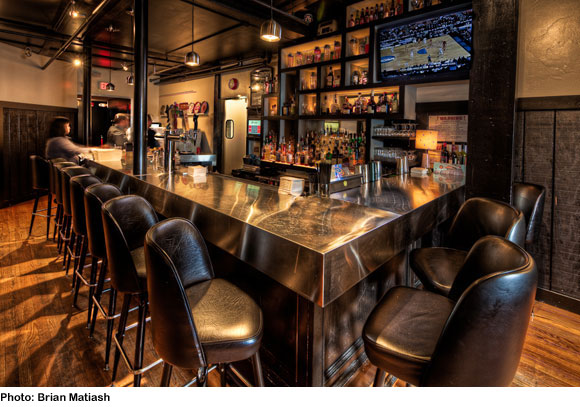
Established: 2009
Specialty: cocktails, High Life
Prices: Low to moderate
Atmosphere: Retro but not kitschy. Top-notch hospitality without the VIP price tag. Unofficial motto: Be yourself and have a good time. See Best Boston bars for address and contact info.
Remember those cool kids in high school or college who got along with everyone and threw the best parties? They grew up and opened a bar called Trina’s Starlite Lounge (3 Beacon St., Somerville).
Josh Childs, Trina and Beau Sturm, and Jay Bellao have collective decades of experience tending bar in Boston, and Childs is still co-owner of one of Boston’s most beloved establishments, Silvertone. This group’s level of hospitality is right up there with the city’s top-notch dining rooms, but VIP treatment at the Starlite comes dressed in T-shirts and tattoos and for the price of a hot dog and a High Life. And it comes without anyone looking harried; the staff often seems to be having as good a time as their guests. Many of those guests, in fact, are fellow restaurant industry folk who made this bar a favored haunt almost immediately after it opened in September 2009. The Starlite’s Industry Brunch on Mondays is testament to the goodwill between Childs, Sturm, Ballao & Co. and their colleagues. (Monday brunch is open to the general public, too.)
The drink list changes seasonally and tilts more toward accessibility than artisanal purity. That said, it doesn’t dumb things down. Even cocktail geeks can find items that grab them, like the Tony Montana (Pyrat rum, Benedictine, Carpano Antica, orange bitters, $9). Also, the bartenders have the skills — along with the quality spirits and house-made mixers — to accommodate off-menu requests. As for beer, High Life has the kind of cult status at the Starlite that PBR enjoyed a few years ago. You can even order it by the bucket (five pony-sized bottles for $11). Blessedly, there are a few craft beer options (Stone Pale Ale, Saison Du Pont) for those times when you want a brew that doesn’t taste like melted Crayons. The wine list is decent, too, and the food is classic American comfort fare like fried chicken and buttermilk waffles, homemade soup and the wacky DOTD (dog of the day).
Oh, another good thing about the Starlite, besides its affordability, is that there are two separate bars and dining areas with two distinct personalities. For all the regulars who have adopted this lounge as their living room away from home, this is a great way to mix things up.
Tags: Beau Sturm, Jay Bellao, Josh Childs, Trina Sturm, Trina's Starlite Lounge
Posted in Boston bars | 4 Comments »
April 15th, 2010
I wish I could buy a drink for each and every imbiber who voted this the Best Blog in the Boston Phoenix’ Best of 2010 readers’ poll. But my bar tabs are insane enough as it is, so I’ll go with a simple “thank you.”
I’m tickled that the Phoenix refers to me as an “experienced taproom denizen.” Speaking of taprooms, many congrats to best Boston bars Deep Ellum, Drink, Eastern Standard, Franklin Cafe and Highland Kitchen for their wins in various bar/cocktail categories, and to Guerilla Queer Bar for Best LGBT Night.
Cheers and thanks again to all drinkboston readers!
Tags: Boston Phoenix Best 2010
Posted in Boston bars, drinkboston in the news | 11 Comments »
April 2nd, 2010
A few items to wet your whistle this month as springtime alternately entices and enrages us like a temperamental lover…
» Cheap drinks. Thank you, Boston magazine, for this article on where to get bargain cocktails around greater Boston. The list features establishments that sell mixed drinks for as little as $5.75 (for a Sazerac at Grendel’s Den in Harvard Square — formidable!) and no more than $10. Many of Boston’s best bars are included, which brings up a good point. I don’t think any of the “craft” cocktail bars in the city charge more than $12 for a cocktail, and several charge less than that. Yes, $12 is a nice chunk of change, but it’s not exactly $15 or $18 or whatever it is that swank nightclubs and hotel bars charge for the privilege of consuming an underchilled vodka martini on their glamorous premises. Generally, the creed of better cocktail bars has been that if you are forking over $10 or more for a drink, it should contain good ingredients (quality spirits, fresh juice, real grenadine, etc.), have balanced flavors (this usually involves measuring), be properly shaken or stirred, and be served with hospitality.
» Bar rules. Patrick Maguire, the blogger behind I’m Your Server Not Your Servant, has published a handy list of 64 Suggestions for Bar Customers. A couple gems: Rule # 12. “If you’re standing in the bar area, be aware that the folks seated at the bar need space too, particularly if they are eating. It’s annoying for a seated customer to get bumped repeatedly by people standing behind or around them.” Rule # 45. “Don’t ask, Why don’t we get one?, loud enough for everyone to hear when a bartender announces something is on-the-house to someone sitting next to you. There’s a reason why they’re getting a complimentary treat and it’s none of your business.” If Maguire starts circulating photos of habitual offenders like they did in Edwardian England, look out.
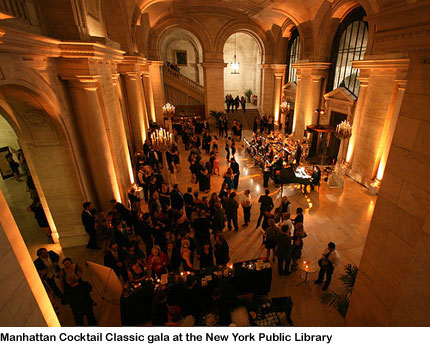
» Manhattan Cocktail Classic. For cocktailians, if it’s springtime, it must be World Cocktail Week (May 6-13, 2010). The Museum of the American Cocktail in New Orleans launched the concept practically in tandem with the museum’s founding in 2005. Basically, MOTAC encourages bars and cocktail enthusiasts to throw a collective, worldwide party in celebration of one of our nation’s greatest inventions. As it tends to do, Manhattan has gone whole hog in this endeavor with the Manhattan Cocktail Classic, which launched in pilot mode last October and is debuting as a full-blown event May 14-18. If you’re planning on going, get your tickets now, as they are expected to sell out quickly. Meanwhile, drinkboston has a little World Cocktail Week party of its own in the works, so stay tuned.
» 19th century pub crawl. I have to admit I’m a bit ruffled that a group of New Yorkers, of all things, has organized a 19th century pub crawl in Boston, of all places. But hey, history is history and drinking is drinking. The crawl, led by the New York Nineteenth Century Society, begins at 5:30 p.m. on Saturday, April 10. It starts and ends with 19th-century cocktails at Eastern Standard and Drink, respectively, and in between hits the Red Hat Café, Union Oyster House and Bell in Hand Tavern. The promo says, “Appropriate nineteenth century attire is encouraged, but by no means required.” Phew, ’cause I think I left my whalebone corset in a cab after drinking too much Fish House Punch.
» It’s official. We exist. Wow, this must be the NYC edition of Nips. The Village Voice has deemed Boston’s cocktail scene “not far behind” New York’s, praising us for our lack of “handlebar mustache and speakeasy aesthetic.” Um … thanks. The bars Drink, Eastern Standard and Craigie on Main and the cocktail supply shop the Boston Shaker all get mentions. Congrats to all!
Tags: 19th century, bargains, Manhattan Cocktail Classic, New York, Village Voice, World Cocktail Week
Posted in Boston bars, Cocktails, Nips | 4 Comments »
March 17th, 2010
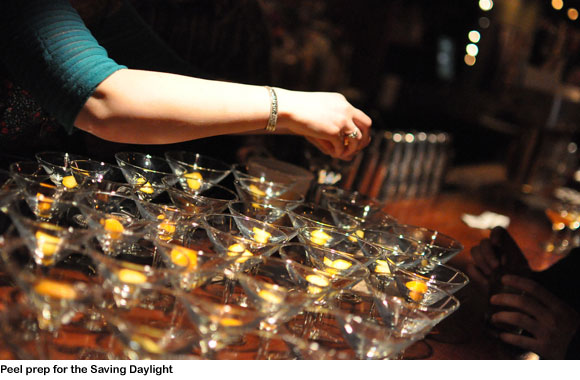
As we witnessed Sunday night, all that Boston imbibers need to lure them out of the house when it’s raining sideways is the promise of a well-made cocktail and a good party. I applaud our hardiness — not to mention the emerging bar talent that made the evening possible.
Green Street, the venue and co-host for Boston Bartenders on the Rise, made the savvy decision of removing all the tables and chairs from the dining room to accommodate the sell-out crowd. We were warmly welcomed with a beer cocktail by Green Street proprietor Dylan Black called De Stella Nova: Pretty Things Jack D’Or Belgian-style farmhouse ale, 2 dashes of orange bitters and a candied citrus star flavored with coriander.
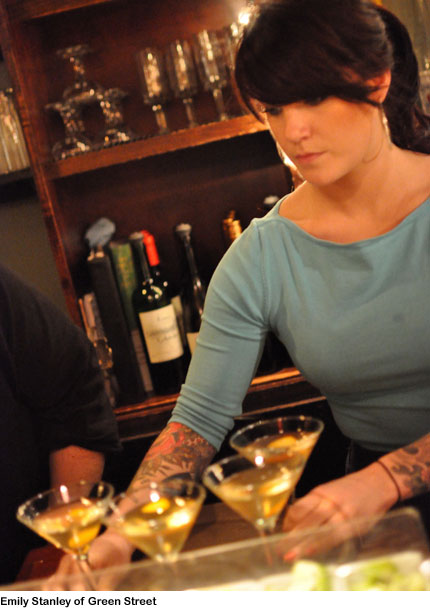
We then moved on to the four original cocktails created for the occasion by our featured talent (recipes and creators listed below in serving order). I circled the place again and again to say hello to everyone while sneaking the occasional fried oyster, chicken rillette, grilled shrimp on a skewer, or juicy slider (thank you for the lovely apps, chef Greg Reeves!).
Many, many thanks to those who traveled both near and far to join in on some drinkboston-style fun. Thanks also to Sean Frederick for the photos and the entire smooth-operating Green Street staff. Let’s do it again soon!
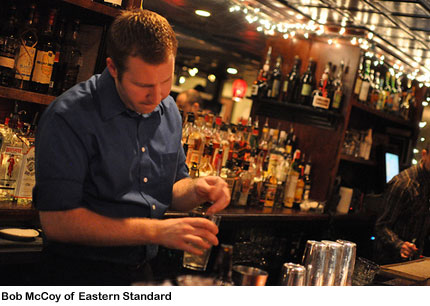
Loose Translation
Carrie Cole, Craigie on Main
1 1/4 oz Scorpion mezcal
3/4 oz Aperol
1/2 oz Mathilde XO orange cognac
1/2 oz pineapple syrup
1/2 oz lime juice
Pinch kosher salt
Dash Allspice Dram
Quick shake over ice, pour entire contents into a highball glass, and top with a splash of ginger ale. Drinkboston: We need something fruity on the menu. Carrie: I’m thinking of using mezcal. Result: a loose, tiki-inspired translation.
Peralta
Evan Harrison, Deep Ellum
1 1/2 oz Old Overholt rye
1/2 oz Cynar
1/2 oz green Chartreuse
1/2 oz fresh grapefruit juice
Dash grapefruit bitters, Deep Ellum orange bitters
Shake over ice and serve straight up with grapefruit peel garnish. Inspired by skateboarding legend Stacy Peralta.
Saving Daylight
Bob McCoy, Eastern Standard
2 oz Plymouth gin
1 oz McCoy’s homemade golden vermouth
1/4 oz St. Germain
1/8 oz Cointreau
Dash McCoy’s aromatic bitters
Stir over ice, strain into a cocktail glass, and garnish with orange peel. Sip as winter turns to spring.
William of Orange
Emily Stanley, Green Street
1 1/2 oz Bols genever
1/2 oz Benedictine
1/2 oz Punt E Mes
1/2 oz Aperol
Dash orange bitters
Stir over ice and serve down (i.e. strain into a rocks glass). Named for the English king who ushered in the era when Dutch genever became English gin.
Tags: Bob McCoy, Carrie Cole, Dylan Black, Emily Stanley, Evan Harrison, Green Street, mixology
Posted in Bartenders, Beer, Boston bars, Cocktails, Events, Gin, Whiskey | 4 Comments »
February 1st, 2010
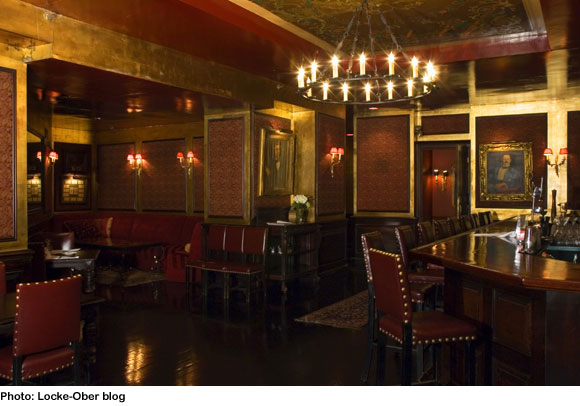
Established: 1875
Specialty: Wine, Martinis, Manhattans
Prices: High
Atmosphere: “Locke’s has no peer and few rivals. And the top-hatted ghosts at its bar are those great of the legendary past: Eben Jordan and Theodore Roosevelt, John Drew and Dr. Lowell. They are all drinking Ward Eights with Nick (Stuhl) and Mr. Camus and the founding fathers, Locke and Ober.” — Lucius Beebe. See Best Boston bars for address and contact info.
Oh, Locke-Ober. You’re like a politician who has been in office forever. Your stunning longevity, and all the historic moments in which you’ve played a part, give you an aura of grandeur. In your presence, people speak in hushed tones. You are an institution. But oh, how you rest on your laurels. How you favor the cronies who have propped you up and who expect things to be done a certain way. How you sometimes just seem like a decrepit, old man.
Because of the latter traits, the bar at Locke-Ober is probably the worst Best Boston bar. I am conflicted about the place. I love going there, often on my own, ordering a Martini and a bowl of JFK Lobster Stew, and feeling like a part of Boston history. But whenever I go, I think about how much better it could be.
I am far from being a regular — I don’t have that kind of money, and it’s not the kind of place where I run into people I know — but from what I’ve observed, the bar experience doesn’t come near the quality of the dining room experience. Locke-Ober is famous for its waiters who have worked there for decades. I notice that when they come to fetch a drink order at the bar, their poise and professionalism usually stand out in contrast to that of the bartenders. The bar seems to lack such elder statesmen.
Not that tending bar at Locke-Ober should require only elders, or men. In 2001, Lydia Shire took over the kitchen at this male-dominated institution (it took until 1970 for women to be admitted to the dining room!). She updated the food to meet contemporary fine-dining standards while ensuring the quality of classic Locke-Ober dishes like Dover Sole and the abovementioned stew. My dream is for someone to swoop in and similarly improve the bar. I mean, doesn’t it violate some city statute that the place that invented the Ward Eight makes perhaps the worst example of that cocktail in Boston? Crown Royal, sour mix and cheap grenadine — on the rocks. Yikes. Recently, someone ordered a Martini with a twist and got a dried-out, pithy peel that had been cut hours before. And the service at the bar is decent but lacks that special flourish you expect to find at the city’s oldest and most famous fine restaurant. It seems obvious that Locke-Ober’s dedication to excellence should apply to bartending, but the management has yet to subscribe to that idea.
Nevertheless, I’ll keep going back to toast the top-hatted ghosts, and urging history-minded visitors to do the same, as long as the place is around. I am hopeful that progress can happen, even at Locke-Ober.
Tags: Boston history, Locke-Ober, Lucius Beebe, Ward Eight
Posted in Boston bars | 26 Comments »