October 30th, 2014
OK, there was a fair amount of wine involved, too. And in the beginning, pisco. At the very end, there might’ve been a Hanky Panky.
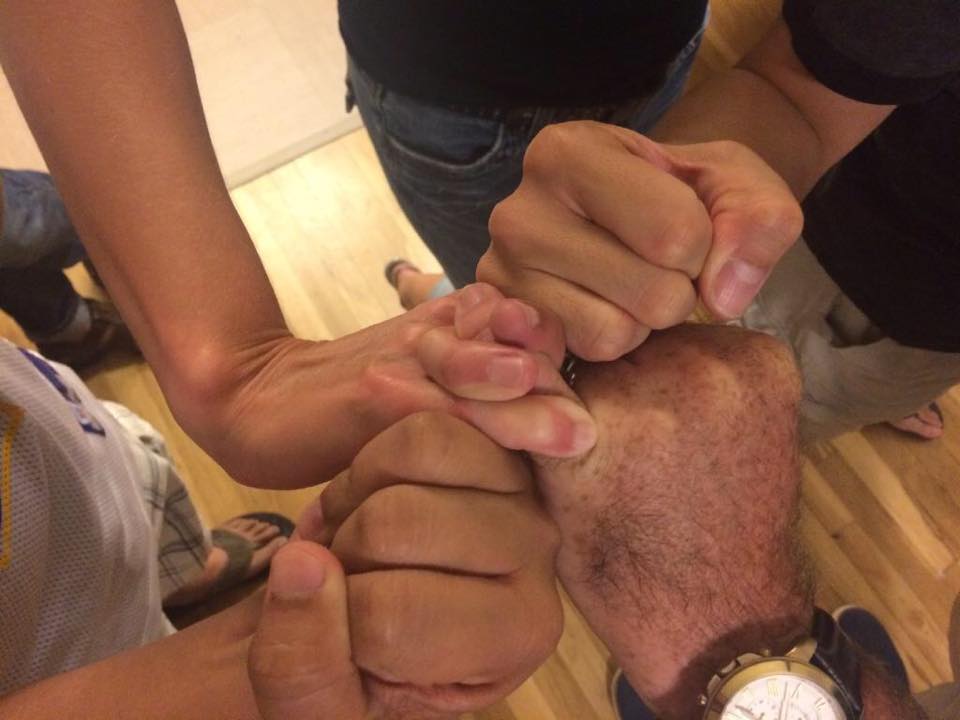
Had there not been photographic evidence of me pinky-swearing with three other lapsed bloggers that we would post something on our respective sites by the end of October (and at least once a month thereafter, so they tell me), I would’ve merrily boarded a plane back to Boston from a little trip to LA and thought, ‘Wasn’t that a fun, consequence-free get-together with some West Coast friends! Tra-la-la-la!’
And then… Facebook. And the pinky-swear evidence. And lots of tagging of those present at the pinky-swearing and chiming in of those who were not present but who posted pictures of their own pinkies so that they could join the Great Cocktail Blogger Revival of 2014. (Hello, RumDood and Liquid Muse.) Damn you all. Especially Jake Parrott, who instigated the whole ceremony with his jab that a drinks blogger is “someone who does not write about cocktails on the Internet.”
Daniel Djang, a.k.a. Thirsty in LA, does not belong in that category — he still blogs all the damn time — but he offered his pinky just ’cause he happened to be there. Naturally, he was first to complete the October assignment. Next among the remaining trio of truly lapsed bloggers was Ron Diggity, a.k.a. LushAngeles (still one of the greatest blog handles ever). Chuck Taggart of Looka! at the Gumbo Pages has posted twice since the swearing, although he apparently has something more up his sleeve to complete the assignment. Still, technically, I finish last.
Not only that, I win the Most Lapsed Blogger award. I didn’t post for two and a half years! Then, earlier this year, I re-lit the OPEN sign for a pop-up, if you will: two posts about my recently published book. But that was way back in May. Boston friends keep asking me, ‘So, what are you going to do with drinkboston, anyway?’ And I’m like, ‘Mmm, nothing. Probably.’ Hey, this post isn’t even about a Boston bar, or a new cocktail or spirit, or anything useful. It’s about me talking about blogging. For the love of god, why are you even reading this?
Permalink | 2 Comments | Filed under L.A. |
May 2nd, 2014
Crafty Bastards: Beer in New England from the Mayflower to Modern Day from Audissey Media on Vimeo.
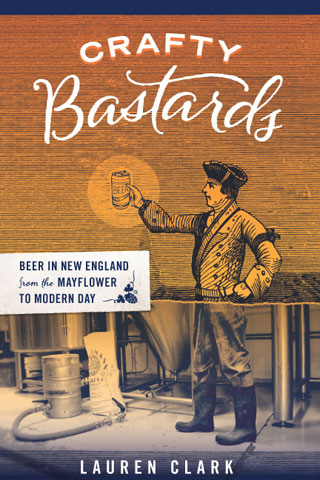
Huh? Yeah, they make trailers for books, it turns out. Here’s the one for my book, Crafty Bastards: Beer in New England from the Mayflower to Modern Day. (Don’t worry, it’s wicked short — and really well done.) It was filmed at the Cambridge Brewing Co.
Speaking of the Cambridge Brewing Co., it’s having its 25th anniversary this weekend, starting tonight and lasting through tomorrow night. There will be 25 beers on tap (including many from brewmaster Will Meyers’ barrel cellar), live music and a homebrewing contest. One of the featured beers is Cambridge Imperial Amber, which CBC alumni (including me) were invited to help brew. Yeah, that’s me in the photo mashing in. I’m heading to the brewpub to try some as soon as I publish this post.
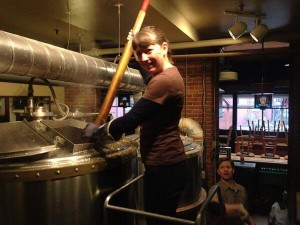
Me mashing in at the Cambridge Brewing Co.
Crafty Bastards officially came out yesterday and is now for sale in stores and online. If you like to shop local and independent, you can find Crafty Bastards at the Harvard Book Store and Porter Square Books in Cambridge, the Boston Shaker in Somerville and Sault in the South End. It will also be available around New England at bookstores large and small, and independent shops like A&G Homebrew Supply of Portsmouth, NH and Vermont Spirits Distilling Co. in Hartford, VT. Various New England breweries are also ordering the book to sell in their taprooms, which is a very appealing purchase option. Finally, you can order copies directly from the Union Park Press website (check out their other titles, especially Drinking Boston, while you’re at it) and on Amazon.
For updates and other fun stuff, check out my sweet new author website by Noah Kuhn of PilotMade. It has a calendar of parties, media appearances and signings in case you want to track me down at one of those. And if we run into each other and you happen to have my book on hand, I will gladly sign it.
Permalink | No Comments | Filed under Beer, Books & resources | Tags: crafty bastards
February 26th, 2014
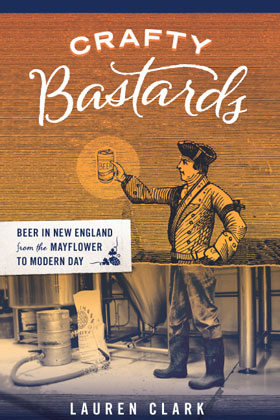 Oh, hey. This old watering hole has been boarded up for a while. You may have passed by from time to time and wondered, ‘When’s someone going to do something with that place?’
I never could part with the liquor license, so to speak. And it’s a good thing, because I left a few half-empty bottles lying around, and I could use a drink. See, I had an adventure in Los Angeles. Then I drove back to Massachusetts with my Grammy Clark’s American Tourister Bag. Then I got the opportunity to write a book about beer history. Now I’m done, and the book’s coming out at the end of April. It’s called Crafty Bastards: Beer in New England from the Mayflower to Modern Day, and the fine team at Union Park Press is putting it out.
The story starts literally from the day the Pilgrims landed in Plymouth (because they ran out of beer) and ends right about now, in the midst of the current craft beer boom. In between are the Puritans, the American Revolution, rum, cider, the Industrial Era, ale versus lager, saloons, Prohibition, Haffenreffer and ’Gansett and all their brethren, trailblazing homebrewers, David Geary and Jim Koch and the other early New England microbrewers, beer bars, BeerAdvocate, and a few resurrections.
There will be many fun and beery book release parties. I’ll keep you posted here and/or at my forthcoming “Hi, I’m an author” website. (Stay tuned.) Or you can follow me on Twitter, Instagram or Facebook.
As for this blog … I’m honestly not sure what sort of shenanigans I’ll revive here. So much has happened in Greater Boston Imbibing since July 2011. I’m just starting to catch up! See you out and about.
Permalink | 7 Comments | Filed under Beer, Books & resources |
July 9th, 2011
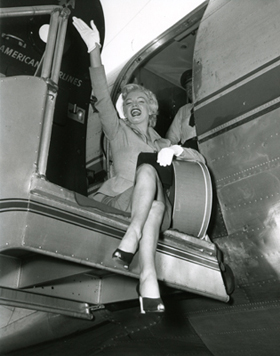 You probably noticed things haven’t been pouring around here lately. Sorry. I’ve been in the middle of a big transition that will, I’m sad to say, render drinkboston.com an artifact. This blogger is moving to L.A.
It’s a day-job thing. My career in university communications has progressed despite my second “career” carousing Boston bars by night and writing about the goings-on in them during lunch. So, hello, University of Southern California! Luckily, my new employer is close to downtown L.A., home of such luxe watering holes as The Varnish and Caña.
Will there be a DrinkLA.com? ‘Fraid not. My new position, along with explorations of my new city, will keep me plenty busy for a while. But I will keep this site online — and will continue to moderate comments — for those who want to browse any of the 450 posts I’ve written over the past five years.
It sounds clichéd, but it’s true: One of the best things about publishing this blog is the people I have met. Bartenders, barbacks, fellow customers, cocktail enthusiasts. Brand ambassadors, professional mixologists, other drink writers. And, of course, many, many of my fellow Boston imbibers. I thank all of you for the good cheer, the support you gave this endeavor, and the time you spent reading and commenting on the scribblings here. I’ll miss you, I’ll miss this town, and I’ll miss this labor of love. But I look forward to downing a round of Fernet with you when I visit. Cheers, y’all!
Permalink | 23 Comments | Filed under L.A. |
May 15th, 2011
Muchas gracias to everyone who turned up at last Sunday’s Cócteles Latinos! party at Trina’s Starlite Lounge. The drinks, the food, the music and the vibe were all tops. It’s not every day that you can sip on a Mountain Dew Fizz (made with Beija Cachaca) while nibbling on Peruvian potato salad and pulled-pork tortillas, listening to X and the Reverend Horton Heat (thanks, DJ Dave Cagle), and basking in a complete takeover of the Starlite’s main bar. Thanks to Beau and Trina Sturm for hosting this shindig with drinkboston, and to guest bartenders Ben Sandrof and Misty Kalkofen for their dream-team antics. Below, enjoy the party photos and the recipes — just in time for your summer drinking needs — that Beau, Ben and Misty dreamed up for the occasion. Salud!
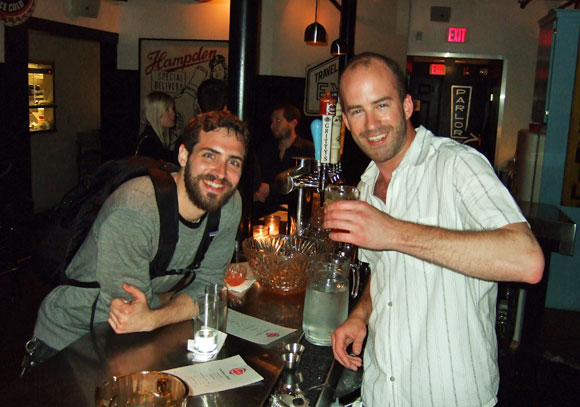
Green Street bartender George Theodore Jenich and Ben Sandrof
Chinaco Punch
2 oz Chinaco Plata tequila
3/4 oz Yellow Chartreuse
1/4 oz Luxardo Maraschino
1/2 oz lemon juice
1 1/2 oz watermelon juice
1 oz vinho verde
Combine all ingredients and serve in a rocks glass over a large ice cube or two. Scale up for a big punch bowl with a big chunk of ice in the middle.
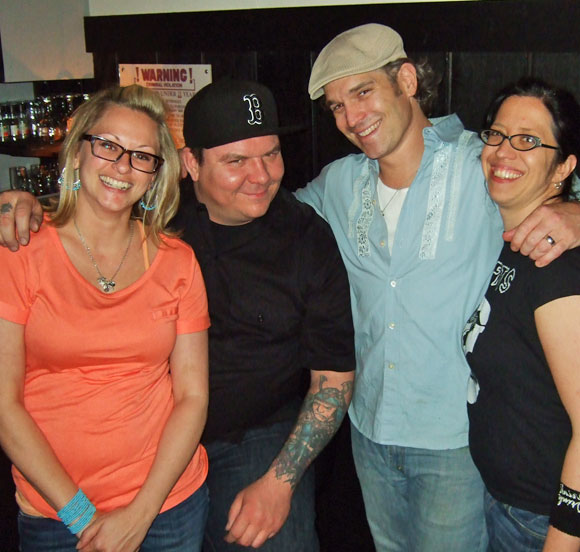
Trina Sturm, Dave Cagle, Beau Sturm and Misty Kalkofen
Corn & Oil
1 1/2 oz. Brugal Anejo rum
3/4 oz Velvet Falernum
1/2 oz lime juice
Shake ingredients briefly over ice, then strain into glass with crushed ice. Top with several dashes Angostura bitters.
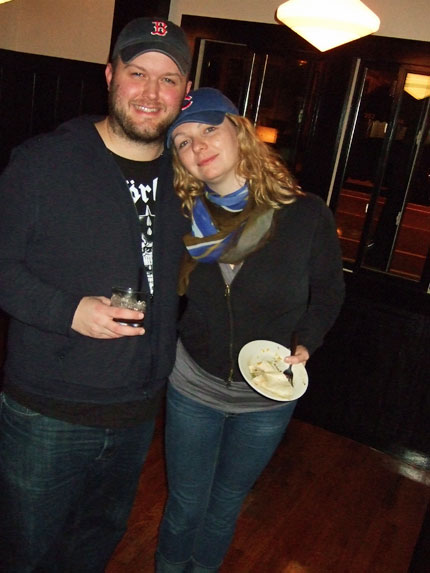
Phillip Naslund of Local 149 and friend Sarah
Magic Word
2 oz Chinaco Plata tequila
3/4 oz St Germain Elderflower Liqueur
1/2 oz Aperol
1/2 oz lemon juice
1 1/2 oz hard cider
Combine all ingredients and serve in a rocks glass over a large ice cube or two. Scale up for a big punch bowl with a big chunk of ice in the middle.

Lillian Milagros Carrasquillo, Jonathan O'Toole, Kim Boutwell and Sean Frederick
Mountain Dew Fizz
2 oz Beija Cachaca
1 1/2 oz Mountain Dew
1/2 oz lime juice
1/4 oz agave syrup
1 egg white
Dry shake all ingredients except Mountain Dew. Add ice and Mountain Dew and shake very well until egg white froths. Strain into highball glass.
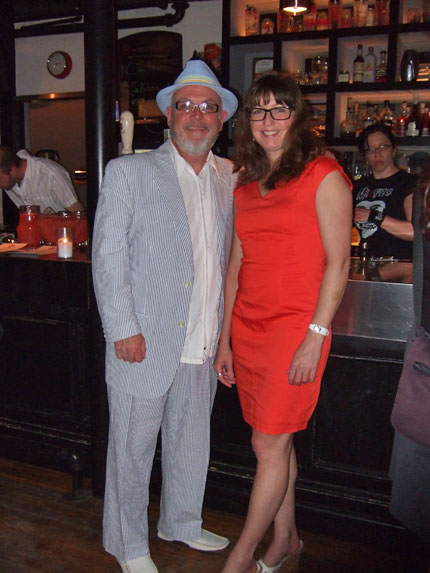
Brother Cleve with Lauren Clark of drinkboston
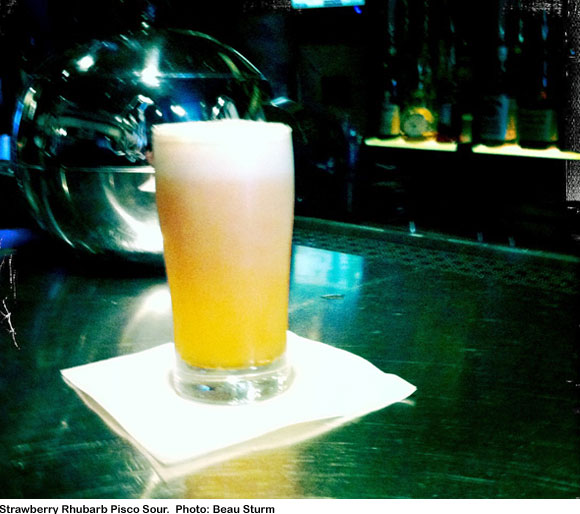
Strawberry Rhubarb Pisco Sour
2 oz Macchu Pisco
1 egg white
1 oz fresh strawberry syrup*
1/2 oz simple syrup
1/2 oz lime juice
Rhubarb bitters
Dry shake all ingredients except rhubarb bitters. Add ice and shake very well until egg white froths. Strain into highball glass and top with rhubarb bitters. *Strawberry syrup: puree fresh strawberries and pass through a chinois. Mix liquid 1:1 with white sugar until sugar dissolves.

Los cocteleros: Noah and Elizabeth
Zocalo
2 oz Del Maguey Vida mezcal
1/2 oz dry vermouth
1/2 oz canela (cinnamon) simple syrup
2 dashes Angostura orange bitters
Lemon oil garnish
Combine first four ingredients in mixing glass filled with ice and stir very well. Strain into chilled martini or rocks glass and twist lemon peel over the top.
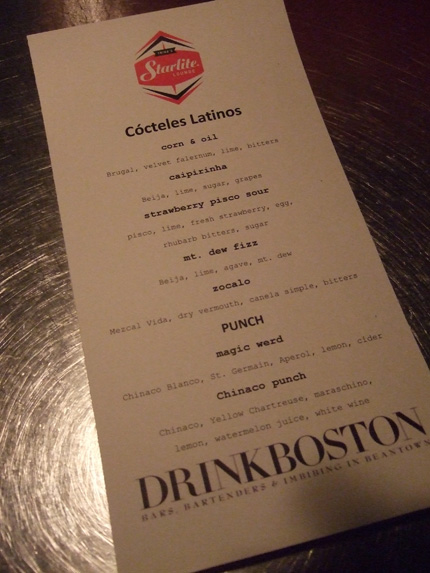
Permalink | No Comments | Filed under Cocktails, Events, Pisco, Punch, Rum, Tequila | Tags: cachaca, mezcal, summer cocktails, Trina's Starlite Lounge