Archive for the ‘Boston bars’ Category
March 30th, 2011
“The first day of spring is one thing, and the first spring day is another. The difference between them is sometimes as great as a month,” said Henry Van Dyke. That’s why we have cocktails and dancing.
» Opus Affair Presents: the WAITIKI Festival of Music & Cocktail, Russell House Tavern, April 10, 6:00-10:00 p.m. Opus Affair, Graham Wright’s non-profit social networking group for young professionals interested in the fine arts, and the exotica orchestra WAITIKI are planning “a night of all-out tiki to launch us into spring,” says WAITIKI bandleader Randy Wong. Imagine classical musicians, tiki geeks and cocktailians getting loose on rum-tastic drinks and grooving to sultry soundscapes by — and inspired by — the legendary Martin Denny. The godfather of exotica music, Denny would have turned 100 on April 10. Inbetween sets of live exotica, Brother Cleve and his friends Jack Fetterman and Gina of the Jungle will assume DJ and MC duties. All the while, barman Aaron Butler will lead his Russell House staff in mixing classic and original tiki cocktails featuring rums by Montanya, El Dorado, Folly Cove and Chairman’s Reserve. No cover charge for this shindig, but a donation of $20 is suggested for the musicians. More details here. Anyone remember Boston’s first WAITIKI Fest back in ’07? I do. Barely. See you on April 10!
» Bulleit Rye. I was recently mailed a small sample of rye by the makers of the well-regarded “frontier whiskey” Bulleit Bourbon. Bulleit Rye’s grain content is a whopping 95% rye (by U.S. law, rye whiskey must be at least 51% rye), which makes for an estery nose and a spicy, dry character. A Bourbon Blog review compared the finish to “cinnamon red hot candy.” In an Old Fashioned, that trait, along with the heat of a 90-proof spirit, evoked the velvety raspiness of a kitten’s tongue. I really liked the stuff and am looking forward to trying it in cocktails around town. Bulleit Rye should be available very soon and, like Bulleit Bourbon, is fairly priced ($28 or so).
» Cocktail Wars. Woodward at the Ames Hotel is doing another round of Cocktail Wars starting this Sunday, April 3. The Ames PR folks call it “an Iron Chef-style bartending competition taking place every Sunday where two of Boston’s best mixologists go head-to-head to create the best cocktail using a series of secret ingredients (typically a spirit, a fruit, an herb, or a vegetable) in the allotted time. The creations are then judged by some of Boston’s biggest industry experts.” Posing as one of those industry experts, I’ll be judging the April 24 contest. These contests are quite lively — last year I judged the finals — so swing by for a look.
» New Boston-area bars. Crikey, I’ve been so busy visiting new bars around town that I forgot to write about them. Here are some very short reviews:
- Bergamot: This well-reviewed restaurant in Somerville where EVOO used to reside has a small bar and real cocktails executed nicely by ex-Craigie on Main bartender Paul Manzelli and crew.
- Citizen Public House: Another success story in the Franklin Cafe/Franklin Southie/Tasty Burger constellation. Bar manager and all-around whiz Joy Richard of LUPEC Boston assembled a crack team of bartenders and instituted Boston’s first comprehensive American whiskey menu.
- Erbaluce: Chef Charles Draghi now has a bar program commensurate with his revered cuisine, thanks to Nick Korn (formerly of Eastern Standard) and Robert Hoover (formerly of Upstairs on the Square). The two are working magic with a cordial license and will soon be offering homemade vermouth.
- The Gallows: Well-made, approachable cocktails at a jumpin’ South End bar with killer food. Helmed by some of my fave barwomen, including April Wachtel and Danielle Marshall.
- Local 149: Stumbling upon this new Southie outpost where the Farragut House once stood is like stumbling upon a beehive in a quiet meadow. Lots of room at the bar, good-looking eats and a solid cocktail list written in part by ex-Craigie on Main wunderkind John Mayer.
- Temple Bar: OK, it’s not new. But after helping put Russell House Tavern on the map, Alex Homans is breathing new life into this warm Cambridge bar whose cocktails have historically been pretty ho-hum. Woo hoo!
Tags: Bergamot, Bulleit Rye, Citizen Pub, Cocktail Wars, Erbaluce, Local 149, Opus Affair, Russell House, Temple Bar, The Gallows, tiki, Waitiki, Woodward at Ames
Posted in Boston bars, Events, Nips, Whiskey | 7 Comments »
September 25th, 2010
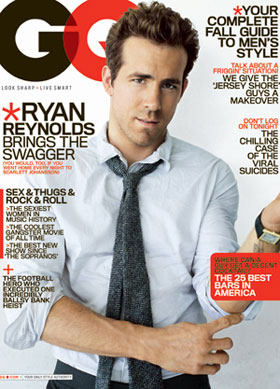 It’s a pretty good list. That is, GQ magazine’s first attempt at choosing, in ranked order, The 25 Best Cocktail Bars in America. Let’s get out of the way the fact that, like any “best of” list, this one has provoked some gripes. No Teardrop Lounge (Portland), no Vessel (Seattle), no Milk & Honey (New York)?
And don’t get Bostonians started. Ranking “evolved music venue” the Whistler in Chicago above our city’s Drink, an actual cocktail bar? And what’s with back-handed compliments like, in the Drink writeup: “Don’t cringe when the bartenders … ask for your ‘flavor profile.’ They mean no harm” (this notion that Drink’s bartenders behave like New Age therapists has got to die); and referring to Eastern Standard as “(perhaps unintentionally) the most elegant sports bar in the country”? Ouch.
But wait. Maybe Eastern Standard really is the most elegant sports bar in the country. That’s part of what makes it great. And GQ chose the ZigZag Cafe in Seattle as the number-one cocktail bar in the land. Is anyone going to quibble with that? Let’s congratulate both Drink and Eastern Standard for making the list and also raise a glass to GQ for promoting to a mass audience the idea that “every city in this country deserves a bar that cares deeply about the craft of the cocktail.”
» Bartenders on the move… We applaud and lament the departure of Superman Sam Treadway from the 21st-best cocktail bar in America (see above). The poor thing left Drink for a job offer to open three new hotel bars in Hawaii… Tom Schlesinger-Guidelli, who left Craigie on Main early this year, will soon open the Island Creek Oyster Bar as general manager in the Kenmore Square space that used to house Great Bay… Meanwhile, a few doors down, the talented Bob McCoy is wrapping up his tenure at Eastern Standard to join ICOB as principal bartender. The new restaurant won’t be cocktail-centric, although something tells me you’ll be able to order a top-notch drinky there… Speaking of top-notch drinkies, the talented bar staff at Craigie on Main offers best wishes to their colleague Paul Manzelli, who is leaving to pour libations at the new restaurant Bergamot. This development, along with Greg Rossi’s presence behind the now-full-liquor-licensed bar at Dali, makes the intersection of Beacon and Washington streets in Somerville an unlikely spot for dueling fine-dining barmen… Finally, two of Boston bartending’s big guns, Todd Maul of Clio and journeyman Ben Sandrof, will appear for one night only tomorrow (9/26) at Woodward at AMES ongoing Cocktail Wars.
» Freaky Tiki Fridays II. You might remember that July’s Nips column mentioned a fun new thing called Freaky Tiki Fridays at Think Tank in Kendall Square. Well, the day after the inaugural happy hour, Cambridge experienced the Great Flash Flood of 2010. Think Tank’s sub-basement space was nearly destroyed. Now the joint has re-emerged from the deluge, and Boston’s Emperor of Exotica, Brother Cleve, reports that the weekly after-work shindig with Polynesian-styled cocktails and app specials and “an array retro/futuristic sounds of nu/old school lounge, tiki/exotica, surf, soul and other titty shakers” is back on.
» Bittermens Bitters. Finally, finally, finally, Boston has its own bitters producer. The saga of Bittermens Bitters, which Avery and Janet Glasser started in 2007, has included a long and drawn-out licensing application, an ill-fated partnership with the Bitter Truth, and, finally, today’s status as a legal producer and seller of “non-potable” elixirs — like Xocolatl Mole Bitters, Grapefruit Bitters and Boston Bittahs — beloved by craft cocktail bartenders nationwide. Congrats and best of luck to this local concern. Here’s how to buy Bittermens Bitters.
Tags: Bittermens Bitters, GQ, Think Tank
Posted in Bitters, Booze in the news, Boston bars, Nips | 8 Comments »
August 31st, 2010
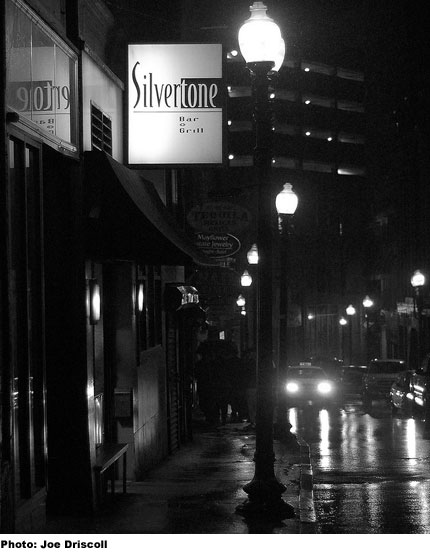
Established: 1997
Specialty: Wine, cocktails
Prices: Low to moderate
Atmosphere: Retro-tinged neighborhood joint, bartender’s bar and classic downtown Boston destination, all in one. See Best Boston bars for address and contact info.
In the world of contemporary Boston bars, Silvertone is an elder statesman that’s still very much an influential player — and a faithful drinking buddy to boot.
Co-proprietor Josh Childs opened the place in 1997 in a “weird little tucked-away space” on Bromfield Street. Silvertone (named after the brand of mid-century radios, amps and guitars coveted by collectors) was an unusual and immediately appreciated concept at the time, the time being pre-No. 9 Park, pre-Mantra, pre-“ladder district” … basically pre-Downtown Crossing as a hip destination. Cheap, satisfying comfort dishes (mac n’ cheese, steak tips), a mere $10 markup on good bottles of wine, a tastefully retro diner-meets-lounge look, and a warm, competent staff beckoned the business-people, lawyers (Suffolk Law School is a neighbor) and restaurant-industry folk who were and are still key elements of Silvertone’s clientele.
From the start, Silvertone showed particular love toward that latter group — our hardworking servers, bartenders, chefs, etc — by keeping its kitchen open until 11:00 (hardly anyone outside Chinatown was doing that in ’97), hiring a solid, loyal bar staff and doing a “good last call,” says Childs, who can still be found behind the bar on Tuesday nights serving drinks right up until 2:00 a.m. (Silvertone’s other longtime bartender, Cedric Adams, and his colleague Michael Stevens, are “like bookends,” each working three nights apiece.) Before they became celebrity chefs and restaurateurs, Ken Oringer, Andy Husbands, Barbara Lynch and Garrett Harker dropped in regularly after their shifts, and before they became celebrity wine and cocktail consultants, Steve Olsen and Willy Shine were admirers.
Which brings us to Silvertone’s liquid legacy. It might not have been as influential on our city’s current cocktail scene as the B-Side, but, in addition to listing the Negroni on its first drink menu, Silvertone does have the distinction of pioneering the Boston restaurant industry’s obsession with the insanely medicinal Italian digestivo Fernet Branca. Early on, its back bar also boasted Chartreuse VEP, Blanton’s bourbon (before boutique bourbon became a staple) and a dozen single-malt scotches.
These days, says Childs, who opened Trina’s Starlite Lounge in 2009, there’s a greater appreciation at Silvertone for cocktails — e.g. sour mix gave way to fresh citrus a while back. But it’s “still a bar,” where shots and beers are regularly ordered, he says. “There’s something to be celebrated about being a good bar.”
Tags: Cedric Adams, Downtown Crossing, Fernet Branca, Josh Childs, Michael Stevens, Silvertone
Posted in Boston bars | 6 Comments »
June 3rd, 2010
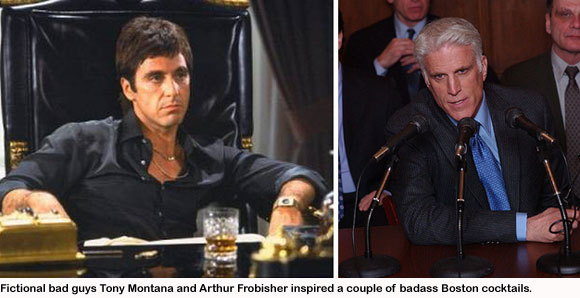
The latest happenings in and thoughts on Boston’s world of drink… First, ‘bad guy’ cocktails. OK, two cocktails does not make a trend, but maybe more will follow from this post, and then we’ll have conveniently manufactured one. (I love social media!) What I’m getting at are Eastern Standard‘s Frobisher and the Starlite Lounge‘s Tony Montana.
I was delighted when Jackson Cannon, who, like me, is a devotée of the FX series Damages, told me he was naming a new cocktail on the menu after Arthur Frobisher, the Enron-inspired CEO played by Ted Danson. Frobisher stands out as a bad guy in a show populated almost entirely by bad guys (and girls — the protagonist is the ruthless high-stakes litigator Patty Hewes, played by Glenn Close). That’s because Danson has elevated playing an unmitigated tool to a high art form. Cannon celebrates that achievement with a stirred, straight-up mixture of 2 oz Oxley gin, 3/4 oz ES’ own rose vermouth, 1/4 oz Luxardo maraschino liqueur, orange oil and a Luxardo cherry.
Then there’s the Tony Montana, which Beau Sturm is known to serve while uttering its name in the Cuban accent with which Al Pacino menaces his way through the gangster training video Scarface. The recipe: 2 oz Pyrat rum, 3/4 oz Carpano Antica, 1 barspoon Benedictine and 1 dash orange bitters, stirred well and strained. The thing about these drinks is that they’re not just ridiculous concoctions slapped with a badass name to get people to drink them. The cocktails themselves are badass — all spirits, straight up, not to be trifled with. Never mind that both Frobisher’s and Montana’s substance of choice is powdery and white, not fiery and wet.
» Stoddard’s (48 Temple Place). My first impressions are pretty positive. The place looks beautiful, with its brick walls, massive, century-old bar imported from England, prints of old Boston, and local artifacts including old street lamps and corsets from an early incarnation of the Stoddard’s space (before its days as a cutlery shop of the same name). The lamb sausage sandwich and the steak frites over braised oxtail were really good, as was our bar service by Jamie Walsh. The Gin Sling and Stone Sour, both tall drinks over ice, were well made, but the Brandy Crusta was a bit watered down, and the Pegu Club was out-of-whack — too heavy on the Plymouth gin and without Angostura bitters to balance the orange flavors, as Stoddard’s house recipe strangely dictates.
We were fortunate to get a peek at the already infamous, not-yet-open private club downstairs. For a membership fee of $2,000, you get your own key and entrance (in the Winter Place alleyway right next to Locke-Ober) to this low-lit den, plus privileges to use the space for meetings and parties. Stoddard’s was taken to task several months before it opened when a rumor circulated that the club would be men-only. That’s not the case, although Stoddard’s seems to really, really want to skew its demo to recreate a late-19th-century gentlemen’s bar, albeit with TVs. The bar staff appears to be entirely male, and General Manager Billy Lyons said that while membership for the private club is building, only two women have bought in so far.
» If, the next time you go to Drink in Fort Point, you notice a lot more Europeans than usual, blame John Gertsen. He recently traveled to the 2010 Cocktails Spirits expo in Paris as the representative of an American cocktail bar. He gave a well-received presentation about his landmark bar, including a demo of the Chee Hoo Fizz, a cocktail invented by Randy Wong of the exotica orchestra Waitiki, which spearheaded Drink’s now famous summer Sunday tiki nights. While at the expo, Gertsen also encountered a bunch of rare spirits like Portuguese tequila from 1920 and a 1917 vipérine — booze flavored with a big, ol’ poisonous snake. Here’s a video of a good chunk of John’s presentation, and here’s another one of him and fellow Boston barman Scott Holliday (of Rendezvous) looking at the vipérine and other rare liquids with spirits collector George Dos Santos. (Thanks to Jörg Meyer of Le Lion Bar in Hamburg, Germany, for those videos.) Congrats, John!
» Citizen Public House & Oyster Bar. A new outpost of the growing Franklin South End/Franklin Southie empire, the Citizen will open on Boylston St. overlooking Fenway Park in July. Joy Richard, whom drinkboston has mentioned several times as a cocktail contest winner and founding member of LUPEC Boston, will oversee the bar as she does at the other two restaurants. Expect good cocktails, beer and wine but, most important of all, a whiskey bar! In fact, Joy and I happen to be heading to Kentucky next week to visit several distilleries along the Bourbon Trail, starting with Maker’s Mark and a tasting of its new whiskey, Maker’s 46. I’ll be sending regular communiqués via Twitter from that jaunt. Until then…
Tags: Arthur Frobisher, Bourbon Trail, Chee Hoo Fizz, Citizen Pub, Damages, john gertsen, Paris Cocktails Spirits, Scarface, Stoddard's, Ted Danson, Tony Montana
Posted in Boston bars, Cocktails, Gin, Nips, Rum, Whiskey | 10 Comments »
May 2nd, 2010
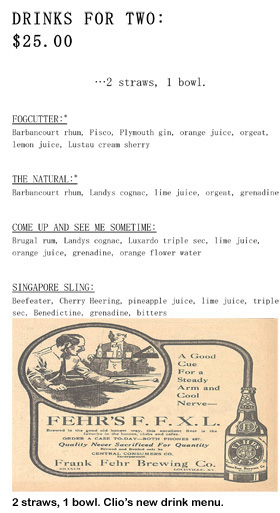 A friend of mine told me that an old flame put the moves on him recently after plying him with drinks. Acknowledging the futility of the attempt to rekindle, the old flame apologized for her brazenness. But she offered this excellent excuse: “It’s spring, and I’m a mammal.”
Well, it’s spring, and I’m a blogger. So here’s some link love…
» LUPEC Boston reviews Todd Maul’s new bar menu at Clio, which leaves all previous bar menus at Clio in the dust. “The 80-plus drinks … run the gamut,” say the Ladies United for the Preservation of Endangered Cocktails, “from aperitifs ($9) to drinks for two ($25) to tiki drinks & daiquiris ($13), and feature a blend of pre-Prohibition and modern classics.” Many of the offerings are designed to pair nicely with the raw delights at Uni, the sushi bar adjacent to the Clio bar.
» Speaking of tiki drinks … doesn’t the balmy spring weather make you thirsty for the serious Donn Beach/Trader Vic-style versions of these rum-tastic cocktails? Sure, you can get them on demand at Drink, Eastern Standard and now, of course, Clio, among a smattering of other spots. But could somebody open up a REAL tiki bar in Boston, already? This city was once a tiki mecca, and, well, how ’bout sprucing up down-on-its-luck Downtown Crossing with a ridiculously fun bar? Silvertone and Stoddard’s (yes, it’s finally open!) can’t do it all by themselves. Sheesh.
» Speaking of LUPEC Boston and new joints, one of the Ladies, Jane Robertson (aka Pinky Gonzales), does an astute write-up of Harvard Square’s new Russell House Tavern for Joonbug (which reviewed drinkboston’s Bartenders on the Rise event not long ago). She pretty much echoes drinkboston’s first impressions of the place: it’s got some baggage to overcome, but its bright spots — including the cocktail list and the horseshoe-shaped, marble bar downstairs — make us root for the place.
» Congrats to these talented barmen and women — who work in some of drinkboston’s fave joints — for making the Improper Bostonian magazine’s long-running Boston’s Beloved Bartenders list: Trina Sturm of Trina’s Starlite Lounge, Scott Marshall of Drink, Corey Bunnewith of Coppa and Ned Greene of Hungry Mother.
» Dan Okrent, whose Last Call: The Rise and Fall of Prohibition was recently reviewed on drinkboston, will talk about his book at an open-to-the-public lecture at the Boston Athenaeum on May 27. So much material here for us history-minded imbibers — reserve your seat starting May 14. And by the way, yours truly will be serving a Prohibition-era cocktail at the post-lecture reception (which also features wine, beer and cheese from Capone Foods).
» Speaking of alcohol, history and lectures, I’m also attending Boston Beer: a History with Michael Reiskind at the Boston Public Library on May 12. Oh, and speaking of beer, don’t forget that the annual American Craft Beer Fest is coming up at the Seaport World Trade Center June 18-19.
 » If you like to drive your car to Boston-area bars but don’t want to risk a DUI (or worse) on your way home, Boston’s Designated Driver is a good service to know about. I haven’t tried it out yet and would love to hear from anyone who has — leave a comment, will you?
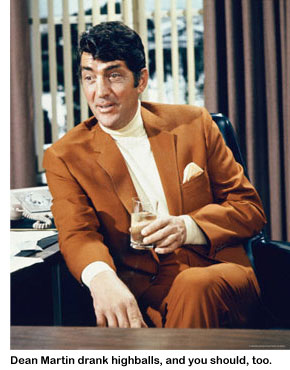
» Hey, did you know that drinkboston and Trina’s Starlite Lounge are having a Highballs party on Sunday, May 9? Reserve your ticket at 617-576-0006 or info@trinastarlitelounge.com and come party like it’s 1965. See you there!
Tags: Boston Athenaeum, Clio, highballs, Improper Bostonian, LUPEC Boston, Prohibition, Russell House, tiki, Todd Maul
Posted in Bartenders, Beer, Booze in the news, Boston bars, Nips | 10 Comments »