Archive for the ‘Bitters’ Category
September 25th, 2010
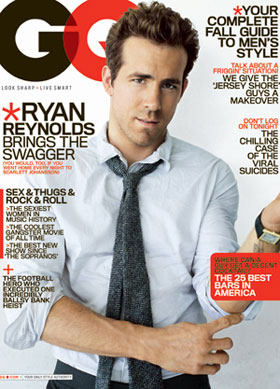 It’s a pretty good list. That is, GQ magazine’s first attempt at choosing, in ranked order, The 25 Best Cocktail Bars in America. Let’s get out of the way the fact that, like any “best of” list, this one has provoked some gripes. No Teardrop Lounge (Portland), no Vessel (Seattle), no Milk & Honey (New York)?
And don’t get Bostonians started. Ranking “evolved music venue” the Whistler in Chicago above our city’s Drink, an actual cocktail bar? And what’s with back-handed compliments like, in the Drink writeup: “Don’t cringe when the bartenders … ask for your ‘flavor profile.’ They mean no harm” (this notion that Drink’s bartenders behave like New Age therapists has got to die); and referring to Eastern Standard as “(perhaps unintentionally) the most elegant sports bar in the country”? Ouch.
But wait. Maybe Eastern Standard really is the most elegant sports bar in the country. That’s part of what makes it great. And GQ chose the ZigZag Cafe in Seattle as the number-one cocktail bar in the land. Is anyone going to quibble with that? Let’s congratulate both Drink and Eastern Standard for making the list and also raise a glass to GQ for promoting to a mass audience the idea that “every city in this country deserves a bar that cares deeply about the craft of the cocktail.”
» Bartenders on the move… We applaud and lament the departure of Superman Sam Treadway from the 21st-best cocktail bar in America (see above). The poor thing left Drink for a job offer to open three new hotel bars in Hawaii… Tom Schlesinger-Guidelli, who left Craigie on Main early this year, will soon open the Island Creek Oyster Bar as general manager in the Kenmore Square space that used to house Great Bay… Meanwhile, a few doors down, the talented Bob McCoy is wrapping up his tenure at Eastern Standard to join ICOB as principal bartender. The new restaurant won’t be cocktail-centric, although something tells me you’ll be able to order a top-notch drinky there… Speaking of top-notch drinkies, the talented bar staff at Craigie on Main offers best wishes to their colleague Paul Manzelli, who is leaving to pour libations at the new restaurant Bergamot. This development, along with Greg Rossi’s presence behind the now-full-liquor-licensed bar at Dali, makes the intersection of Beacon and Washington streets in Somerville an unlikely spot for dueling fine-dining barmen… Finally, two of Boston bartending’s big guns, Todd Maul of Clio and journeyman Ben Sandrof, will appear for one night only tomorrow (9/26) at Woodward at AMES ongoing Cocktail Wars.
» Freaky Tiki Fridays II. You might remember that July’s Nips column mentioned a fun new thing called Freaky Tiki Fridays at Think Tank in Kendall Square. Well, the day after the inaugural happy hour, Cambridge experienced the Great Flash Flood of 2010. Think Tank’s sub-basement space was nearly destroyed. Now the joint has re-emerged from the deluge, and Boston’s Emperor of Exotica, Brother Cleve, reports that the weekly after-work shindig with Polynesian-styled cocktails and app specials and “an array retro/futuristic sounds of nu/old school lounge, tiki/exotica, surf, soul and other titty shakers” is back on.
» Bittermens Bitters. Finally, finally, finally, Boston has its own bitters producer. The saga of Bittermens Bitters, which Avery and Janet Glasser started in 2007, has included a long and drawn-out licensing application, an ill-fated partnership with the Bitter Truth, and, finally, today’s status as a legal producer and seller of “non-potable” elixirs — like Xocolatl Mole Bitters, Grapefruit Bitters and Boston Bittahs — beloved by craft cocktail bartenders nationwide. Congrats and best of luck to this local concern. Here’s how to buy Bittermens Bitters.
Tags: Bittermens Bitters, GQ, Think Tank
Posted in Bitters, Booze in the news, Boston bars, Nips | 8 Comments »
December 30th, 2009
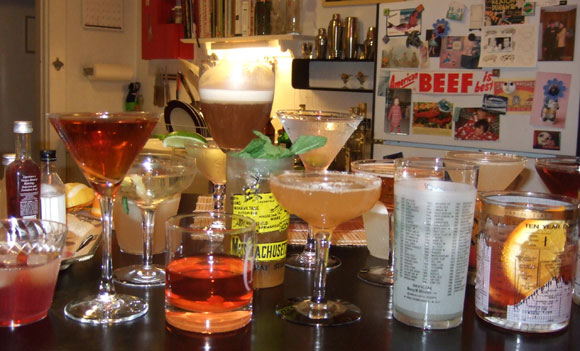
In this last installment of Nips for 2009, let’s consider some of the key developments of Boston’s year in drink.
» Booming business for Boston’s best bars. Probably the pleasantest surprise of the year for imbibers. It’s usually expected that the cream of the crop will thrive, but we’re in the middle of the biggest economic downturn since the Depression, for chrissakes. I know, I know — people drink more when times are tough. But it’s not like we’re talking dive bars, here. And it’s not only existing bars that are doing well. So are some newly opened ones, such as…
» Trina’s Starlite Lounge, Lord Hobo and Woodward. These three fine establishments opened in 2009 for our drinking pleasure. The ’50s-inspired Starlite has quickly become the kind of place that’s like a second living room for denizens of Cambridge and Somerville. It has two full bars to choose from, the vibe is genuinely welcoming and easygoing, the prices are recession-proof, and if you don’t run into someone you know there, then you probably know at least a couple of the bartenders by name.
After months of wrestling with anti-bar curmudgeons from the neighborhood, and amidst much nose-wrinkling over its loony name, Lord Hobo finally opened in the space formerly known as the B-Side Lounge. With a beer list that keeps the likes of the Publick House and Deep Ellum on their toes, serious gastropub fare coming out of the kitchen, and a good-looking cocktail list (albeit one I haven’t tested enough to judge), Lord Hobo has already established itself as a place for serious bargoers.
I’ve only sampled Woodward, in the Ames Hotel, once since previewing it a few months ago. But it’s clear that the place is making a serious attempt to be, for downtown Boston, a rare combo: an upscale tavern with top-notch food; a serious cocktail bar; and a magnet for nightlife. It appeared to be succeeding on all counts when I visited. More study needed.
» Legal Sea Foods discovers real cocktails. One of the most successful restaurant chains to come out of Boston does the right thing by hiring Patrick Sullivan as a beverage czar.
» Boston bartenders get noticed. Some of our best appeared locally on NECN and Chronicle, as well as nationally in the Wall Street Journal, New York Times and Bon Appetit. Plus, drinkboston appeared in two new books: Ted Haigh’s Vintage Spirits and Forgotten Cocktails and Lonely Planet’s Boston City Guide.
» The annual Craft Brewers Conference. It convened in Boston this year, giving a boost to our bona fides as a beer town.
» BarSmarts. Dozens of bar industry people around Boston and New England received top-notch training through this fast-growing program.
» Some positive trends… Tiki. Real tiki drinks could be had regularly at Eastern Standard and Drink, the latter of which had tiki Sundays all summer long. Shared cocktails. The above two spots also raised the profile of punch, one of the most sure-fire ways to put a whole crowd in a good mood. Meanwhile, the Marliave serves FDR martinis by the pitcher. Genius. Bitters. Bitters became more available, and in more flavors than ever before. The Bitter Truth is just one example, and bars continue to have fun making their own. Mezcal. I’m talking about the artisanal stuff, which Del Maguey pretty much single-handedly put on the map around Boston and elsewhere. Look for DM’s brightly colored, folk art-inspired labels at a bar that’s serious about spirits, and order a measure. You won’t look back.
» Last but not least, drinkboston got a stylin’ new design and taught its first class on the history of drinking in Boston. What’s up this blog’s sleeve for 2010? Let’s think about it over drinks.
Happy new year, everyone!
Tags: Lord Hobo, mezcal, recession, tiki, Trina's Starlite Lounge, Woodward
Posted in Bitters, Boston bars, Nips | 9 Comments »
November 9th, 2009
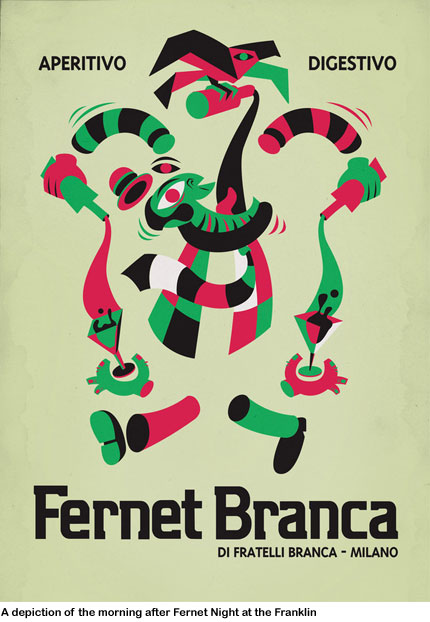
Bankers, you know what I’m talking about: the bottom line is that Fernet Night at the Franklin Southie last Thursday was a good time. As I made my way through the crowd handing out Fernet Branca swag — shirts, aprons, posters — I clinked glasses with a mix of old acquaintances and drinkbostonians I’d never met before, sprinkled with a few bar industry folk. Joy Richard and Peter Cipriani kept the six Fernet cocktails on the evening’s menu coming, along with shots in iced ponies that Joy spent days painstakingly freezing.
This was the first of several upcoming “industry” nights at the Franklin Southie. Generally, the second Thursday of every month will feature drinks with a certain ingredient. Coming up — St. Germain and Chartreuse. See the Franklin’s calendar or connect with them on Facebook for updates.
You asked for recipes? You got ’em.
Work in Progress
Tom Schlesinger-Guidelli – Craigie on Main
3/4 oz Fernet Branca
1 oz Bols Genever
1 oz St. Germain
3 dashes orange bitters
Stir over ice, serve down, flamed orange peel.
Bonita Applebum
Emma Hollander – Trina’s Starlite Lounge
1 oz Applejack
3/4 oz Fernet Branca
3/4 oz Drambuie
Stir over ice, serve down, orange peel.
Jackson’s Night Cap
Jackson Cannon – Eastern Standard
1 oz Rittenhouse Rye
1 oz yellow Chartreuse
1 oz Fernet Branca
Dash of chocolate mole bitters if you have them; whiskey barrel-aged work as well.
Stir over ice, strain into a chilled glass, garnish with lemon twist.
Casey Brown
Josey Packard – Drink
1 1/2 oz Sazerac Rye
1 oz green Chartreuse
1/2 oz Fernet Branca
Dash Angostura bitters
Stir over ice and strain into a chilled glass with a lemon twist.
Improved Toxic Moxie
Joy Richard – The Franklin
1 1/2 oz Rittenhouse Rye
3/4 oz Fernet Branca
3 dashes whiskey barrel-aged bitters
Build in a highball glass, fill with ice. Top with Moxie. Garnish with an orange peel.
Villa de Verano
Misty Kalkofen – Drink
2 1/4 oz El Tesoro Platinum tequila
3/4 oz Jarabe de Cacao Ahumado*
1/4 oz Fernet Branca
Stir over ice, serve straight up. Garnish with grated coffee bean.
*Jarabe de Cacao Ahumado
1 cup sugar
1 cup water
2 cinnamon sticks
1/4 cup cocoa nibs
1/4 tsp Mexican smoked salt
Make a “tea” with the water, cinnamon, cocoa nibs and salt by bringing to a simmer over low heat. Remove from heat and stir in sugar. Allow to cool and strain.
Tags: Fernet Branca, Franklin Southie
Posted in Bitters, Cocktails | 9 Comments »
October 27th, 2009
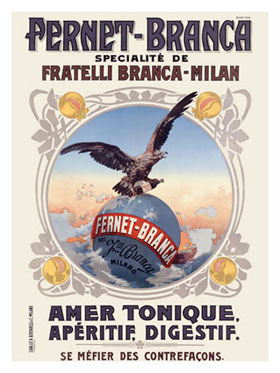 The eagle has landed. Boston imbibers, you’re invited to a joint drinkboston – Franklin Southie production: Fernet Branca Industry Night.
What: A festive gathering for industry and non-industry folk alike who are curious or passionate about the pungent, dark and mysterious digestif Fernet Branca. A special drink menu will feature Fernet cocktails by bartenders around Boston.
When: Thursday, November 5, 8:00 p.m. – last call.
Where: The Franklin Southie, 152 Dorchester Ave., South Boston.
Who: On the stick — Joy Richard, bar manager and head mixologist for the Franklin Southie and the Franklin Café, and founding member of LUPEC Boston; and Peter Cipriani, longtime bartender on the Boston scene (you may also know him from Silvertone and Stella). Joy’s original Fernet cocktail recipe will be joined by recipes from:
- Tom Schlesinger-Guidelli – Craigie on Main
- Misty Kalkofen – Drink
- Josey Packard – Drink
- Jackson Cannon – Eastern Standard
- Emma Hollander – Trina’s Starlite Lounge
What else: Fernet cocktails $7. Fernet in ice shot glasses: $5. Fernet swag (get it while you can). No tickets or reservations required. Fernet, plus appetizer specials and the company of fellow Fernet fiends and curious cocktailians, are what it’s all about.
Remember to sign up for the drinkboston email list at drinkboston (at) comcast (dot) net to get announcements about upcoming events.
Tags: Fernet Branca, Franklin Southie, South Boston
Posted in Bitters, Events | 9 Comments »
September 18th, 2009
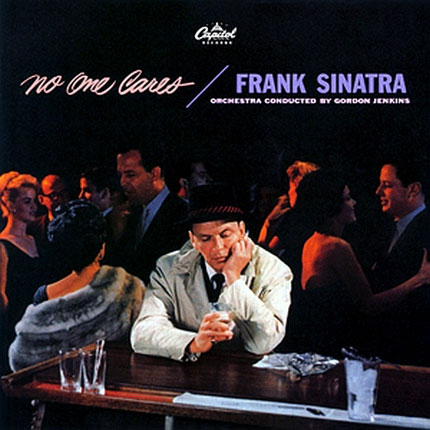
Ever have one of those times in your life when it seems half the people you know are falling in love, getting married and having babies, and the other half are breaking up? Yeah, I thought so. This is for all imbibers facing the latter predicament. Among the many questions you’re grappling with — What went wrong? What will I do now? What is the point of existence? — is one that deserves special consideration: What am I drinking?
OK, here’s what you’re not drinking: Champagne. Cognac. Port. Anything pink. Anything juicy. And if you’re trying to drown your sorrows in something like Pinot Grigio or Michelob Ultra, you’ve got bigger issues than heartbreak.
So what’s left? Gin. Whiskey. Tequila. Maybe even vodka. These should be consumed in something close to their pure form, with nothing more than one or two other ingredients, preferably bitters and vermouth. After all, it’s time to strip away that psychic baggage, to get elemental. You’re dealing with an adult situation — have an adult beverage. What says “I am training for the emotional equivalent of the Iron Man Triathalon” more than a Pink Gin, an Old Fashioned, a Mexican Eagle or a vodka on the rocks? A case can be made for beer, as long as it’s not fancy and accompanies a shot, and, for those with a keen sense of sarcasm, a Zombie. It’s a tiki drink, sure, but it’s got four ounces of rum.
Order one of these at a barely lit bar, stare into your glass with your trenchcoat still on like Frank here, and let the lyrics of another master of heartbreak songs, George Jones, run through your head: “With the blood from my body / I could start my own still / And if drinking don’t kill me / Her memory will.”
And for god’s sake read the Modern Drunkard’s Boozing Through a Breakup.
Tags: break-ups, heartbreak
Posted in Beer, Bitters, Gin, Rum, Tequila, Vermouth, Vodka, Whiskey | 11 Comments »