Archive for the ‘Vermouth’ Category
December 25th, 2010

Imbibers, I hope you got that rare rye whiskey, vintage ice shaver or custom-sculpted muddler you wanted for Christmas. I got the recipe for Silent Night Punch from my friend Pink Lady of LUPEC Boston and warmed the cheeks of my loved ones in New Hampshire with it. Fa la la la la. La la la la. If you find yourself reaching deep into the toe of your Christmas stocking for that one last knick-knack you may have missed, Bad Santa has got you covered. May the following virtual goodies souse up your Christmas night:
Drinkboston mobile. Got an iPhone, Android, Blackberry or some other kind of smart phone? You can now use it to check out drinkboston without having to wait for the full site to load, ’cause I got a sweet new mobile version! You can save an icon on your homescreen, and sharing posts via Facebook, Twitter, etc is a breeze. Bars, bartenders and imbibing in Beantown just got a whole lot more excellent.
Vermouth 101. “The intent of these pages is to demystify vermouth, primarily for the American audience.” From Martin Doudoroff, one half of the team that made every cocktailero’s life easier with CocktailDB, comes a much-needed primer on this misunderstood cocktail staple. (Supporting roles played by Eric Seed, Romée de Gorianoff and Alexandre Vingtier.) Thank you, gentlemen, from the bottom of our livers.
Tiki+ app. The CocktailDB team also presents, in partnership with Jeff “Beachbum” Berry, the newly updated Tiki+ app. One hundred and fifty top-notch, vintage and contemporary tiki recipes, plus pretty pictures, for $3.99. Don’t be a suffering bastard — download yours today!
2010 Devil’s Dining Awards. MC Slim JB distills the best, worst and otherwise most memorable items from the year in dining (and drinking) into this wickedly smart, funny list. In my book, Slim is the best food writer in Boston.
Now… what are you doing New Year’s Eve?
Tags: apps, Martin Doudoroff, MC Slim JB, tiki
Posted in Books & resources, Nips, Vermouth | 5 Comments »
November 5th, 2009
I got to thinking about Massachusetts’ peculiar “cordial license” recently after sitting down with Courtney Bissonnette to get a sneak peak at her cocktail menu for Coppa. The latest venture by prolific chef Ken Oringer is set to open in the South End any minute now and amp up the Italian enoteca concept the way Toro has done with Spanish tapas. Bissonnette will helm the bar program at both establishments, in which her husband, chef Jamie Bissonnette, is a partner.
Unlike Toro, which has a full liquor license, Coppa has a beer and wine license with a permit to serve cordials and liqueurs. So Bissonnette, collaborating with head bartender Corey Bunnewith (recently of Drink), devised a list of cocktails based on, yes, liqueurs like St. Germain and Cherry Heering, but also vermouths and other aromatized wines, Italian bitters like Aperol and Campari, and a splash of Plymouth Sloe Gin and Pimms No. 1. It includes an Aperol Spritz (Aperol, prosecco, soda) and a Lenny e Joan (Plymouth Sloe Gin, dry vermouth, Cynar, lime, orange zest, sugar rim). Creative, tasty-looking stuff, and, as Boston magazine recently pointed out, Coppa isn’t the only place making cocktails within the confines of a cordial license.
Which brings us to the question: just what are the confines of such a license? Well … no one really knows. “It was never spelled out in writing,” said a long-time member of Boston’s liquor wholesale industry who wishes to remain anonymous. This source — I’ll call him Stan — says that the license came about because of Italian-American drinking customs. Specifically, North End restaurateurs, who typically had beer and wine licenses, were miffed about getting busted periodically for offering their clientele a customary after-dinner shot of Sambuca or Strega. So, in 1994, the cordials and liqueurs permit was born. Stan connects this development to the growing clout of Italian politicians around that time. While I haven’t done the research to verify that claim, it is intriguing that 1994 marked the beginning of both the cordial license and Tom Menino’s long (and, since Tuesday, getting longer) tenure in the mayor’s office.
Anyway, the thing about the cordial license is that “cordial” and “liqueur” have been liberally defined. Most people — including liquor industry folk, says Stan — first assumed that the license referred only to sugary spirits flavored with various fruits and botanicals. But over the years, outliers snuck in. Grappa? Pisco? Check. Applejack? Check. Flavored vodka? Check. So … if you’re a grape-based spirit, and you want to be served under a cordial license, say you’re from anywhere but France. If you’re applejack, don’t worry; only about three people in the city know what you really are (70% grain neutral spirit — woo hoo!). And if you’re vodka, just infuse yourself with kiwi or something to make yourself seem cute and harmless as a bunny, even though you’re sugarless and 80 proof.
It all adds up to one very grey area, where some spirits attract scrutiny and others don’t. Grappa is an example of the former, and therefore is typically served on the sly, according to Stan. It is actually up to the wholesale companies to decide what they are and aren’t allowed to sell to establishments with cordial licenses. And they all do so individually, says Stan, so there tends to be some variation in product listings. A restaurateur might be able to get, say, applejack through one wholesaler but not another.
While a full liquor license is almost always going to be the most desirable type of license, mixologists can get pretty creative with a cordial license. And, presumably, these licenses are cheaper and easier to get than full licenses, which are strictly capped and therefore so coveted that corruption regularly ensues. Liquor laws are weird in a sometimes cool way. I love that a special provision created to accommodate the customs of an influential ethnic group has spawned creative bars that are mixing interesting drinks with unusual ingredients. And it’s nice knowing that if I go to a place like Coppa and I’m not in the mood for a mixed drink, I can get a nice, civilized, 110-proof shot of green Chartreuse.
Tags: Coppa, cordials, liquor license, Massachusetts liquor laws
Posted in Applejack, Liqueur, Pisco, Vermouth | 6 Comments »
September 18th, 2009
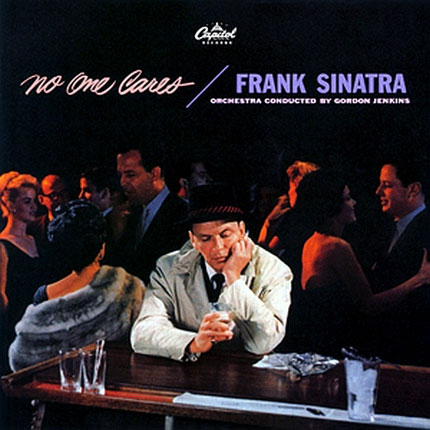
Ever have one of those times in your life when it seems half the people you know are falling in love, getting married and having babies, and the other half are breaking up? Yeah, I thought so. This is for all imbibers facing the latter predicament. Among the many questions you’re grappling with — What went wrong? What will I do now? What is the point of existence? — is one that deserves special consideration: What am I drinking?
OK, here’s what you’re not drinking: Champagne. Cognac. Port. Anything pink. Anything juicy. And if you’re trying to drown your sorrows in something like Pinot Grigio or Michelob Ultra, you’ve got bigger issues than heartbreak.
So what’s left? Gin. Whiskey. Tequila. Maybe even vodka. These should be consumed in something close to their pure form, with nothing more than one or two other ingredients, preferably bitters and vermouth. After all, it’s time to strip away that psychic baggage, to get elemental. You’re dealing with an adult situation — have an adult beverage. What says “I am training for the emotional equivalent of the Iron Man Triathalon” more than a Pink Gin, an Old Fashioned, a Mexican Eagle or a vodka on the rocks? A case can be made for beer, as long as it’s not fancy and accompanies a shot, and, for those with a keen sense of sarcasm, a Zombie. It’s a tiki drink, sure, but it’s got four ounces of rum.
Order one of these at a barely lit bar, stare into your glass with your trenchcoat still on like Frank here, and let the lyrics of another master of heartbreak songs, George Jones, run through your head: “With the blood from my body / I could start my own still / And if drinking don’t kill me / Her memory will.”
And for god’s sake read the Modern Drunkard’s Boozing Through a Breakup.
Tags: break-ups, heartbreak
Posted in Beer, Bitters, Gin, Rum, Tequila, Vermouth, Vodka, Whiskey | 11 Comments »
August 12th, 2009
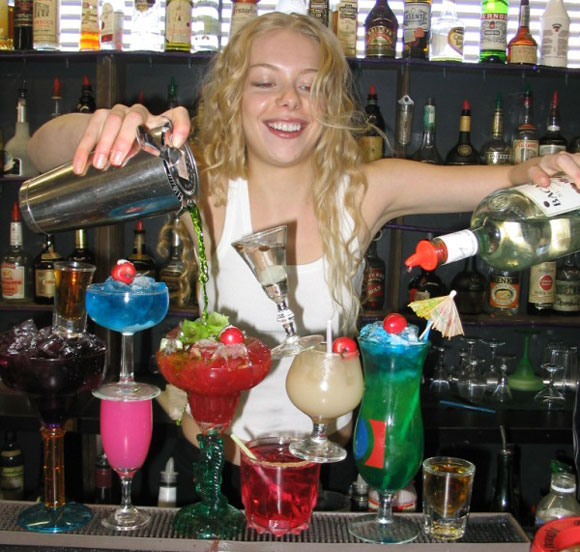
The number of bars in Boston that make serious cocktails is increasing despite the Great Recession (right, Lord Hobo and Trina’s Starlight Lounge?), which makes our livers quiver with excitement. But the truth remains that the vast majority of bars out there aren’t up on this classical mixology thing. That’s the case even for some of the establishments we love, as well as for places whose enticing cocktail menus belie their lack of bartending talent.
Take Aquitaine in the South End. Nice-looking brasserie with an intimate little bar at the entrance. I was thrilled to see they had the Scofflaw — the Chartreuse version! — on their menu, so I ordered one. The bartender free-poured it (not something you want to do with a drink containing green Chartreuse), added a mere dash of lemon juice (one of the drink’s primary ingredients), and proceeded to … stir the mixture. Oh my.
When you find yourself craving a cocktail in a mixologically challenged establishment, you need to have in the back of your mind a safety drink or two. You know, a simple mixture that even the most minimally stocked bar or dimmest bartender can make (or be instructed to make). This is an easy decision for a lot of people — hello, gin and tonic! Little chance for error there. But, inexplicably, I’ve never liked gin (or vodka) and tonic. Not even a little bit. So here’s what I order:
Negroni. All bars have gin and sweet vermouth, and most have Campari, so this is an old reliable. Plus, ordering one immediately gives you an aura of mystery, because the Negroni is still considered exotic in most bars. I was once at Red Line in Harvard Square watching the cute, young things behind the stick crank out Oatmeal Cookie shots. I had to walk one of them through a Negroni, but she managed. I enjoyed my drink and bought another for the DJ. (MC Slim JB, I know you disagree with me on this one, but I have had surprisingly good luck getting a decent Negroni in all sorts of places.)
Gimlet. I rediscovered these when I had to make one while studying for the BarSmarts class. A good London dry gin, a splash of Rose’s Lime, and a lime wedge — it’s a surpisingly kick-ass drink! And any flunkie can throw it together … on the rocks, anyway. Oh, and ordering one makes you feel like you’re in a Raymond Chandler novel.
Lowball. I only like a splash of soda in my whiskey, so I order one of these instead of a highball. Before I could reliably find Maker’s Mark behind any bar, I’d order a “Jack Daniels on the rocks with a splash of soda and a twist.” Especially at hinterland weddings and those occasions when I find myself at a bar in Weirs Beach, NH, during Bike Week, this is my go-to drink.
CC Manhattan. Yes, Canadian Club. Rocks (always safer than straight up). Twist or cherry depending on my mood or lack of will to specify. A pretty satisfying drink, and you can order it absolutely anywhere. I especially like asking for these in bars near touristy summer spots where everyone’s drinking Bahama Mamas. It’s kind of like wearing wingtips on the beach.
I love to know what other people’s safety drinks are, so feel free to weigh in.
Tags: Gimlet, lowball, Manhattan, Negroni, safety drinks
Posted in Cocktails, Gin, Vermouth, Whiskey | 31 Comments »
September 26th, 2008
So, I announce some interesting event at a bar, like a Boston-New York bartender exchange or a tasting of Old Tom gin, tell everyone to check it out, and then just skip to the next post without recollecting the pleasant times that have given me, as Diana Ross would say, the sweetest hangover. My bad. Here’s a little follow-up on recent events.
That bartender exchange between Eastern Standard and PDT? Well done. I don’t have any intel yet on how ES’s Kevin Martin fared in New York, but it was a pleasure to be PDT bartender Daniel Eun’s patron during his guest stint in Boston. The highlight for me was Daniel’s beer cocktail. It involved a vigorously shaken mixture of Aventinus (a delicious weizenbock from the German brewery G. Schneider & Son), Sailor Jerry Rum, a whole egg and a bit of nutmeg grated over the drink’s frothy crown. As I told a friend, that drink was so good I wanted to marry it. Or at least shack up with it for the winter.
The B-Side Group Hug was a lot of fun, with a roomful of regulars, industry people and cocktailians paying their boozy respects. Would some bartender out there please keep the B-Side’s Tommy Noble cocktail alive? I love this combo of gin, Pimm’s, simple syrup and lemon juice. It’s a great drink to start the evening with, and it’s perfect for brunch, too. Oh, and FYI: B-Side barmen Al and Russ are both doing stints at the old Downtown Crossing haunt Cafe Marliave, which has recently been re-vamped.
Last night at Deep Ellum, a dozen or so people — many of them industry — gathered on the back porch to taste Hayman’s Old Tom Gin and Dolin Vermouth with Eric Seed of the Minnesota-based import company Haus Alpenz. There were people from Rialto, Dante, Eastern Standard, the Wine Bottega and Reservoir Wine & Spirits. Luckily for my lazy ass, Fred and Andrea from the Cocktail Virgin Slut blog were there taking notes, so if you want details on these spirits (and on the Trilby cocktail that bartender Max Toste mixed with them), check out this post. Max also showcased the Old Tom in a Tom Collins and a Ramos Gin Fizz, among other delights.
Thanks again to all of you who make going out to bars in Boston more interesting and fun than ever.
Posted in Beer, Boston bars, Cocktails, Events, Gin, Vermouth | 4 Comments »